Bulls represent a disproportionate share of a herd’s genetic investment relative to their headcount, and heat stress hits them in a way that doesn’t show up until it’s already cost a breeding season: reduced fertility that isn’t obvious at the time of exposure and doesn’t fully resolve for weeks or months afterward. Shade for bulls isn’t just a comfort consideration — it’s a fertility management tool with a documented, time-delayed connection to breeding outcomes that makes it worth planning for deliberately rather than assuming general herd shade coverage is enough.
This guide covers what makes bull shade a distinct planning category: the specific fertility research behind heat stress in bulls, sizing and housing considerations for single or small bull groups, siting to avoid the bull-specific problem of excessive shade-seeking at the expense of breeding activity, and how to time shade management around the breeding season calendar.
Why Bull Fertility Is Uniquely Heat-Sensitive
Sperm production is intensely thermoregulated. Unlike most of a bull’s physiology, spermatogenesis depends on the testes maintaining a temperature somewhat below core body temperature — which is part of why the scrotum sits externally in the first place. Heat stress that raises testicular temperature, even without raising the bull’s overall body temperature to a dangerous level, can measurably impair sperm production and quality.
The effects don’t show up immediately. Because sperm takes roughly 60 days to fully develop, a heat stress event doesn’t show up as reduced fertility right away — the testes and tubules store an existing reserve of sperm that gets used first, meaning the fertility impact of a given heat stress episode typically isn’t apparent for 45 to 60 days afterward. This delayed timeline is exactly why a thorough breeding soundness exam 30–60 days before turning bulls out with cows is standard veterinary guidance: it catches problems from heat stress (or other causes) that occurred well before the exam itself.
Recovery takes weeks to months, not days. Research indicates roughly eight weeks are typically needed for normal semen production to return after a heat stress event, though the actual recovery period can range from a couple of weeks to two months or more depending on the severity of the heat exposure. A bull that experiences significant heat stress in early summer may not return to full fertility until well into the following breeding window, depending on timing.
Individual bulls vary meaningfully in heat sensitivity. Research directly heating bulls under controlled conditions has found that some individuals show considerably more pronounced fertility effects than others exposed to the same heat load — meaning herd-wide assumptions about heat tolerance can miss real variation between individual bulls, some of which may need more attentive shade management than others even within the same pen or pasture.
Heat stress affects libido as well as semen quality. Beyond the direct physiological impact on sperm production, heat-stressed bulls can show reduced breeding drive, compounding the fertility impact beyond semen quality alone — a bull physically capable of breeding but behaviorally reluctant to do so during hot conditions represents a real, if less commonly discussed, dimension of heat’s effect on bull performance.
The Shade-Seeking Tradeoff During Breeding Season
This is a genuinely bull-specific management worth understanding directly: a bull that’s hot and unable to cool himself effectively tends to spend time in shade or standing in water rather than actively breeding cows in estrus — meaning inadequate cooling doesn’t just risk long-term fertility, it can reduce actual breeding activity during the exact window it matters most.
This creates a real tradeoff during active breeding season: shade is genuinely important for a bull’s fertility and wellbeing, but a bull that spends excessive time seeking shade relief rather than working cows can also underperform for a different reason — simply not being where and when breeding needs to happen. The practical implication isn’t to withhold shade — inadequate cooling remains the bigger long-term risk to fertility — but to site shade thoughtfully within the breeding pasture rather than assuming any shade access, regardless of placement, automatically produces good outcomes.
Positioning shade in a way that doesn’t pull a bull away from where cows in estrus are likely to be, and ensuring adequate shade capacity so a bull isn’t forced to choose between comfort and proximity to the herd, addresses this tension better than either withholding shade or providing it without regard to breeding pasture layout.
Housing and Sizing Considerations Specific to Bulls
Single-bull housing is common and changes sizing math. Many operations run one bull with a cow group rather than multiple bulls together, meaning bull-specific shade sizing sometimes applies to a single animal rather than a group calculation — worth noting since a single bull still benefits from a properly sized shade structure even though herd-level economies of scale in shade planning don’t apply the same way.
Bulls housed together outside breeding season need space to avoid aggressive interaction. Multiple bulls sharing a pasture or pen during the off-season can show real aggression toward each other, particularly around limited resources — a consideration that applies to shade access the same way it applies to feed or water. Adequate shade capacity, sized generously enough that bulls aren’t forced into close, contested proximity, reduces the risk of injury from bull-on-bull aggression at a shared shade structure.
Bulls are generally larger than cows of the same breed, meaning per-head sizing guidance developed around mature cows may understate what an individual bull actually needs — erring toward the higher end of standard mature-cattle sizing ranges, or sizing individually for bulls housed separately from the main cow herd, tends to produce better outcomes than assuming bull and cow space needs are identical.
Bulls turned out with a cow herd during breeding season share existing herd shade rather than needing separate dedicated structures in most extensive grazing scenarios, meaning the sizing consideration here matters most for bulls housed separately — in a dedicated bull pen, bull battery, or off-season holding area distinct from the main breeding herd.
Siting Shade in Bull Pens and Breeding Pastures
For dedicated bull pens (off-season holding, bull development, or bull battery pens common on seedstock operations), siting follows similar general principles to any cattle shade — airflow, distance from obstructions, proximity to water — with particular attention to pen layout if multiple bulls share adjacent but separated pens, ensuring shade placement doesn’t create unnecessary close proximity or visual confrontation between bulls in neighboring pens that could increase agitation.
For breeding pastures, siting shade in reasonable proximity to where cows in estrus are likely to concentrate — often near water or preferred grazing areas — helps address the shade-seeking-versus-breeding-activity tension discussed above, keeping a bull’s shade relief close enough to breeding activity that using one doesn’t come at the direct expense of the other.
Avoid siting bull pen shade in a way that isolates a bull from visual or auditory contact with the rest of the operation, where practical, since bulls — like other cattle — generally do better with some awareness of their surroundings rather than complete isolation, a consideration that echoes similar visibility preferences documented in other species.
Timing Bull Shade Management Around the Breeding Calendar
The pre-breeding-season window (30–60 days before turnout) is the highest-priority period for ensuring adequate shade and general heat management, given the documented delay between heat stress exposure and its fertility impact. A bull that experiences significant heat stress during this window may enter the actual breeding season with reduced fertility that isn’t apparent without testing.
During active breeding season, the shade-siting tradeoff discussed above becomes the primary consideration — ensuring shade access without inadvertently pulling breeding activity away from where it needs to happen.
Post-breeding season, or during bull development for younger animals, general heat management remains valuable for overall health and future fertility, even without the immediate breeding-season stakes, since young bulls under heat stress during development can show delayed puberty and other longer-term impacts on eventual breeding soundness.
Coordinating a breeding soundness exam timing with recent heat exposure history gives a veterinarian better context for interpreting results — a bull tested shortly after a documented heat stress event, even 30-60 days prior per standard guidance, benefits from that context being available during evaluation.
What to Look for in Bull Pen Shade
- Sizing generous enough for a bull’s larger body size relative to standard mature-cow guidance, particularly for bulls housed individually or in dedicated pens.
- Adequate spacing for multiple bulls sharing a pen or pasture, reducing aggressive contested behavior around a limited shade resource.
- Siting within breeding pastures that doesn’t pull bulls away from active breeding areas, balancing cooling access against proximity to cows in estrus.
- Durability suited to bull behavior specifically, since bulls can be more physically assertive with structures than cows — rubbing, pushing, or otherwise testing a structure’s frame and hardware more forcefully than the average cow might.
- Reliable, low-maintenance performance during the critical pre-breeding-season window, given the outsized fertility consequences of inadequate heat management during this specific 30-60 day period.
Structural Considerations Specific to Bull Behavior
Bulls interact with shade structures more forcefully, on average, than cows do, and this has practical implications for what “adequate” means in a bull-serving structure.
Rubbing and scratching behavior can be more intense. Bulls commonly use available structures for scratching and rubbing more vigorously than cows, particularly around the head and neck region — a frame and attachment hardware that comfortably handles typical cow contact may see more concentrated wear from a bull using the same structure regularly for this purpose.
Territorial or agitated behavior can involve direct contact with structure components. An agitated bull, whether from proximity to another bull, response to cows in estrus, or general temperament, may push against or otherwise physically test a structure in ways that a calmer cow typically wouldn’t — frame joints and anchor points should be robust enough to handle this more assertive interaction without loosening or failing prematurely.
Horn contact, for horned bulls specifically, adds another wear consideration beyond general body contact — canopy material and lower frame components within horn-height range benefit from being positioned or reinforced to resist this specific type of contact where horned bulls are part of the housing situation.
Structures serving bulls benefit from the same overall durability standards recommended for feedlot shade — heavier frame construction, quality welds, and robust canopy attachment hardware — even in a lower-density bull pen setting, since the per-animal physical stress a bull places on a structure can exceed what the same square footage of cow-only shade typically experiences.
Frequently Asked Questions
Does heat stress actually affect bull fertility, or is this overstated? It’s well documented. Because sperm production is intensely temperature-sensitive, heat stress can measurably reduce semen quality and quantity, with effects typically appearing 45–60 days after the heat exposure due to sperm’s roughly 60-day development cycle, and requiring around eight weeks or more to fully recover.
When is the most important time to ensure bulls have adequate shade? The 30–60 day window before breeding season turnout is particularly critical, given the delayed relationship between heat stress and its fertility impact — a standard breeding soundness exam is typically recommended during this same window specifically to catch fertility issues before they affect the actual breeding season.
Can too much shade actually hurt breeding performance? Not shade itself, but poor siting can create a real tradeoff — a bull that spends excessive time seeking shade relief rather than actively working cows in estrus can underperform for reasons unrelated to fertility. Siting shade within reasonable proximity to where breeding activity concentrates helps avoid this tension.
How much shade does a bull need? Generally toward the higher end of standard mature-cattle sizing guidance, given bulls’ typically larger body size compared to cows of the same breed, particularly for bulls housed individually or in dedicated pens rather than sharing existing herd shade during breeding season.
Do multiple bulls need more shade space per animal than cows? Often yes in practice, since bulls housed together can show real aggression around contested resources including shade — sizing generously to reduce close, forced proximity between bulls helps mitigate injury risk from this kind of aggressive interaction.
Do young, developing bulls need shade for reasons beyond immediate breeding performance? Yes — heat stress during a young bull’s development can contribute to delayed puberty and other impacts on eventual breeding soundness, meaning adequate shade during development supports longer-term fertility outcomes beyond just the current breeding season.
The Bottom Line
Bull shade deserves more deliberate planning than a simple extension of general herd shade guidance, given the documented, time-delayed connection between heat stress and fertility, the real siting tension between cooling access and active breeding behavior, and the practical realities of housing bulls individually or in small, sometimes contested groups. Treating the 30–60 day pre-breeding window as a particular priority, sizing generously for bulls’ larger body size, and siting thoughtfully within breeding pastures addresses the specific ways bull shade planning differs from general cow herd shade management.
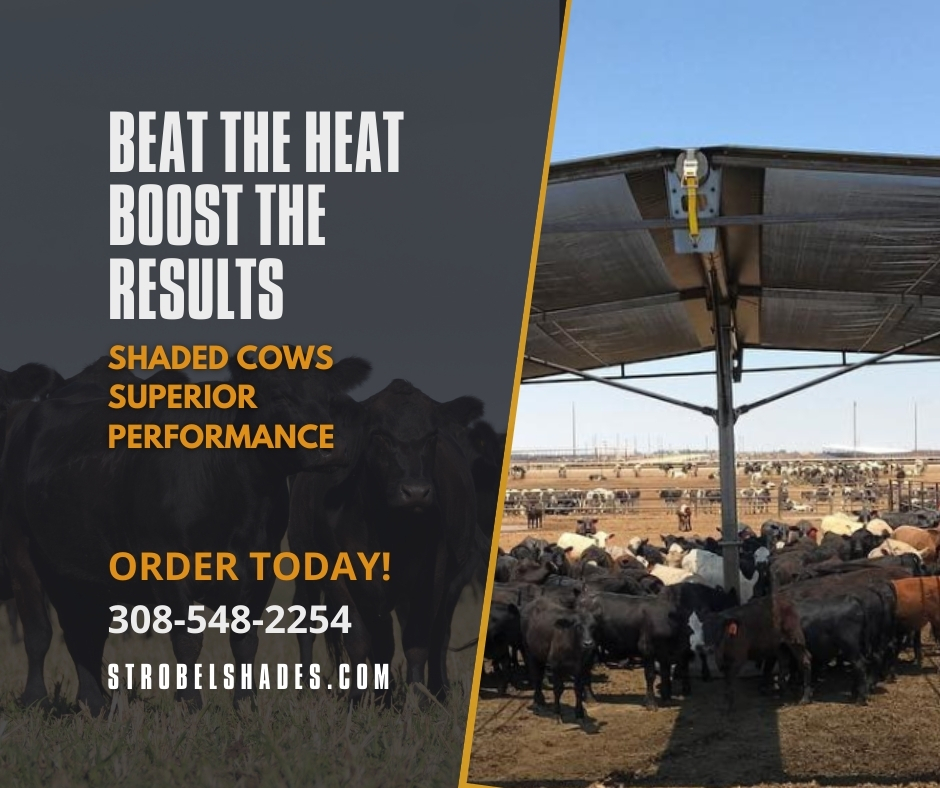
Strobel Manufacturing has built equipment for the farm, ranch, and feedlot since 1946. www.strobelshades.comThe Super Shade’s durable, heavy-duty construction holds up well to the more assertive physical interaction bulls can bring to a structure, with 20’x20′, 30’x30′, and 40’x40′ sizing options suited to individual bull pens or larger breeding pastures. Call (308) 548-2254 or email sales@strobelmfg.com to talk through sizing for your bull housing.